
Stainless Steel Plate types in Industry:

Stainless steel is a remarkable material widely used in various industries due to its excellent properties such as corrosion resistance, strength, and aesthetic appeal. Among the many types of stainless steel, several main grades stand out for their industrial applications:
- Type 304 Stainless Steel
Type 304 is the most commonly used stainless steel in industry. It belongs to the austenitic family and is known for its excellent corrosion resistance and good formability. This versatile grade is often used in kitchen equipment, chemical containers, food processing, and architectural applications. Its ease of fabrication and hygienic qualities make it a favorite in many sectors.
- Type 316 Stainless Steel
Type 316 stainless steel is highly regarded in environments where enhanced corrosion resistance is required, especially against chlorides and marine conditions. It contains molybdenum, which significantly improves its resistance to rust and pitting. This makes it ideal for marine equipment, pharmaceutical manufacturing, and chemical processing industries, where safety and durability are paramount.
- Type 430 Stainless Steel
Type 430 is a ferritic stainless steel often used where cost-effective corrosion resistance is needed with good formability. It is commonly found in automotive trim, kitchen appliances, and architectural applications. Its magnetic properties and attractive finish contribute to its popularity in many manufacturing processes.
- Type 310 Stainless Steel
Type 310 stands out for its excellent high-temperature oxidation resistance. It performs well in heat treatment equipment, furnace parts, and exhaust systems. This grade is essential in industries where materials face extreme temperature conditions while maintaining structural integrity and safety.
The broad spectrum of stainless steel types enables industries to choose the perfect material suited for their specific needs. With continuous advancements and sustainable production methods, stainless steel continues to be an essential material that supports industrial growth, innovation,
Stainless Steel Plate Feature:
- Stainless Steel according to GB/T20878-2007 is defined as stainless, corrosion resistance as the main characteristics, and the chromium content of at least 10.5%, the maximum carbon content of no more than 1.2% steel.
- Stainless steel is the abbreviation of stainless steel, resistant to air, steam, water and other weak corrosive media or stainless steel; The steel that is resistant to chemical corrosion media (acid, alkali, salt and other chemical etching) is called acid-resistant steel.
- Due to the differences in chemical composition and make them both the corrosion resistance of different, ordinary stainless steel is generally not resistant to chemical corrosion medium, and acid is commonly have stainless steel. The term "stainless steel" does not simply refer to one kind of stainless steel, but means more than one hundred kinds of industrial stainless steel, each stainless steel developed has good performance in its specific application field. The key to success is first to understand the purpose and then to determine the correct steel grade. There are usually only six types of steel related to the application field of building construction. They all contain 17-22% chromium, and the better grades also contain nickel. The addition of molybdenum can further improve the corrosion of the atmosphere, especially the corrosion resistance of the atmosphere containing chloride.
- In general, the hardness of stainless steel is higher than that of aluminum alloy, and the cost of stainless steel is higher than that of aluminum. Because of the stainless steel feature, stainless steel is hard to oxidize, so stainless is hard to cut by oxygen fuel gas cutting.
The best Thermal Cutting Methods for Stainless Steel Plates
Stainless steel plates are widely used in various industries due to their excellent corrosion resistance, strength, and durability. When it comes to fabricating stainless steel plates, thermal cutting is a highly effective process for achieving precise shapes and sizes. There are several thermal cutting methods available, each with its unique advantages that contribute to efficiency and quality in manufacturing. Let's explore the main thermal cutting ways used for stainless steel plates:
- Plasma Cutting
Plasma cutting employs a high-speed jet of ionized gas (plasma) to melt and blow away stainless steel. This method is known for its precision and speed, especially suitable for both thin and thick plates. Plasma cutting produces smooth edges with minimal heat distortion, contributing to superior quality and reduced need for secondary processing. Advanced CNC plasma cutters enable automated cutting, enhancing productivity and repeatability for large-scale production.

- Laser Cutting
Laser cutting is a modern and highly precise thermal cutting technology that uses a concentrated beam of light to melt or vaporize stainless steel. It excels at producing intricate shapes and fine details with excellent edge quality and minimal heat-affected zones. Laser cutting is fast, clean, and requires minimal material handling, making it an outstanding choice for industries demanding high precision, such as aerospace, automotive, and electronics.

- Choosing the right thermal cutting method for stainless steel plates depends on factors like material thickness, required precision, production volume, and budget. Each method plasma or laser offers distinct advantages that empower manufacturers to create high-quality products efficiently and sustainably. Embracing these advanced thermal cutting technologies not only optimizes processes but also fosters innovation and excellence in stainless steel fabrication.
Differences Between Plasma Cutting and Laser Cutting for Stainless Steel
When it comes to cutting stainless steel, both plasma cutting and laser cutting are advanced technologies that offer efficient and precise results. Each method has its unique advantages, making them suitable for different applications and project needs.
- Cutting Technology
Plasma Cutting: Plasma cutting uses an accelerated jet of hot plasma to melt and blow away the metal. It is a powerful method ideal for cutting thick stainless steel sheets quickly and efficiently.
Laser Cutting: Laser cutting employs a focused beam of light generated by a laser to heat, melt, and vaporize the metal precisely. This high level of precision is perfect for intricate designs and thinner materials.
- Precision and Quality
Plasma Cutting: Plasma cutting provides good accuracy and a clean cut, especially for medium to thick stainless steel. It is well-suited for industrial applications requiring robust and fast cutting.
Laser Cutting: Laser cutting offers exceptional precision with smooth edges and minimal heat-affected zones. It is perfect for applications demanding fine details and superior finish quality. Laser cutting precision is what the plasma looking for!
Precision is the greatest defference and the biggest advantage laser than plasma.
- Thickness Capability
Plasma Cutting: Plasma cutting excels in cutting thicker stainless steel plates, often up to several centimeters thick, making it highly versatile for heavy-duty projects.
Laser Cutting: While laser cutting can handle a wide range of thicknesses, it is especially advantageous for thin to medium-thickness stainless steel, providing high-quality cuts with less material distortion.
- Speed and Efficiency
Plasma Cutting: Plasma cutting is typically faster when dealing with thicker materials, contributing to greater productivity in large-scale fabrication.
Laser Cutting: Laser cutting is highly efficient for detailed work and can quickly produce parts with complex shapes, enhancing the overall manufacturing precision.
- Application Areas
Both technologies shine in various industries. Plasma cutting is often favored in construction, automotive, and shipbuilding, while laser cutting is preferred in aerospace, medical device manufacturing, and decorative metalwork due to its superior accuracy.
- Budget
Laser cutting machine price is still more expensive than plasma cutting machine, even times, this is determined by components, materials and technology etc.
In summary, plasma cutting and laser cutting are both outstanding solutions for stainless steel fabrication. Understanding their differences helps you choose the best method for your specific project, ensuring excellent results with high efficiency and quality. Both technologies continue to drive innovation, making stainless steel fabrication more versatile and accessible than ever before.
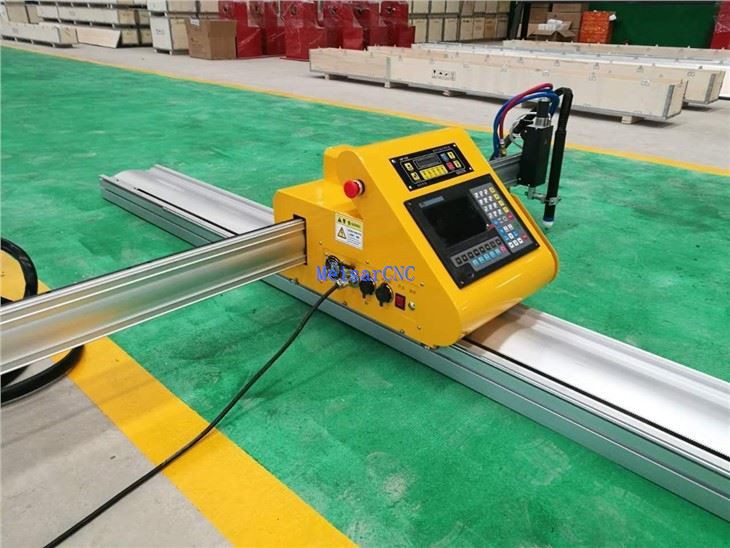
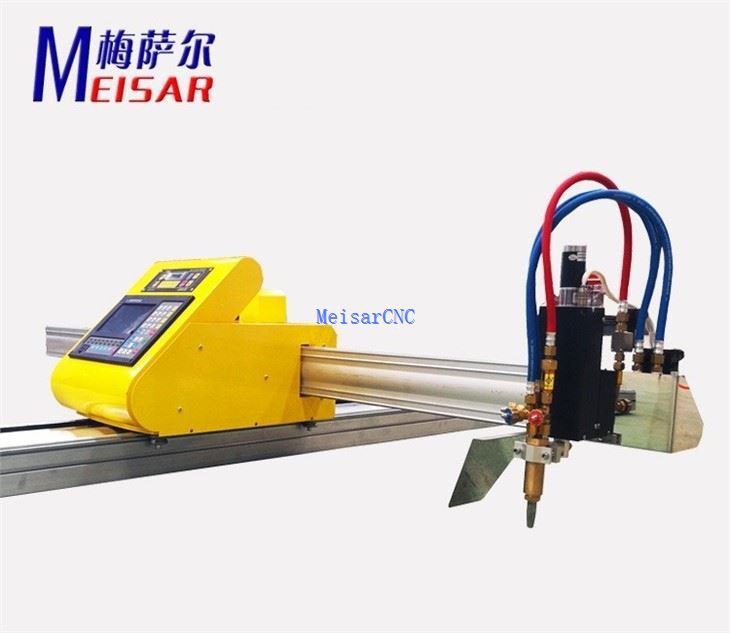
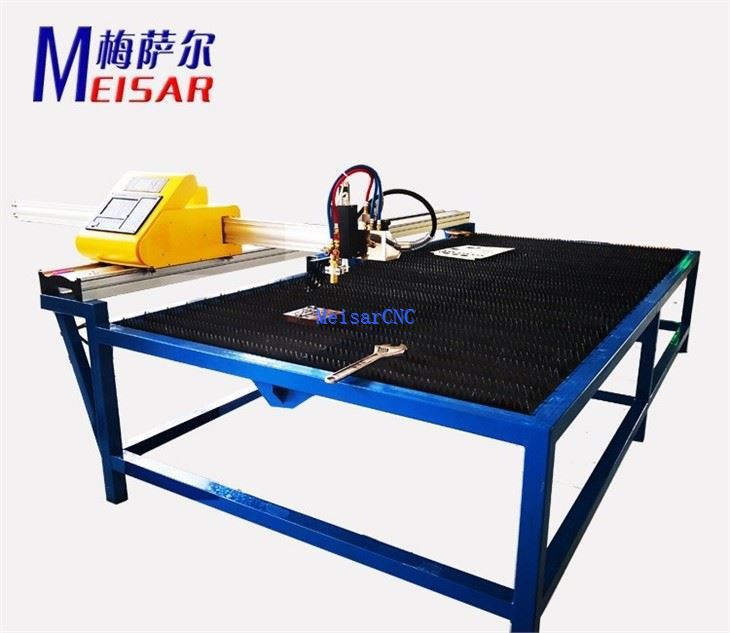
Following is two typical our products: Portable cnc plasma cutter MS-P and CNC laser cutter MS-FL3015

Stainless steel plate cutting machine--Portable cnc plasma cutter introduction:
1.Plasma cutting way, perfectly suitable for stainless steel cutting, also copper etc, cutting thickness can be 0-50mm.
2.Portable type CNC cutting machine, the equipment can be moved at will, convenient and flexible.
3. All small and medium sized machinery and equipment manufacturers can use.
4. Tech is very mature and perfect, easy install and commission.
5. Except for plasma cutting, also available to add flame cutting.
6. Cutting speed is fast, max can reach 6500mm/min
7. Track material is good hard aluminium alloy, toughness and stability is high.
8. The numerical control system is FLSK, easily understand and skilled operation.
10. Compatiable with kinds of NC plasma generator, Say, Hypertherm powermax, Huayuan LGK etc.
11. Configuration is net and enough, no need to replace, safe and practical cost effective, save money.

Stainless steel plate cutting machine--Portable cnc plasma cutter specification:
|
Machine Name |
PORTABLE CNC PLASMA CUTTING MACHINE (CNC Plasma Cutting only) |
PORTABLE CNC PLASMA CUTTING MACHINE (With CNC Flame Cutting) |
|
Machine Model |
MS-P1530, MS-P1630, MS-P2040, MS-P2060 etc |
MS-P1530, MS-P1630 , MS-P2040, MS-P2060 etc |
|
Cutting material |
Alloy, Steel, Stainless steel etc |
Mild steel, Medium carbon steel |
|
Effective Cutting Range (X*Y) |
1600*3000mm-2000*6000mm |
1600*3000mm-2000*6000mm |
|
Torch Height Control Style |
Plasma auto arc voltage THC |
Motor Electric THC |
|
Input Power |
Single Phase AC 110 or 220V |
|
|
Approximately 220W |
||
|
Cutting Modes |
Plasma working with plasma generator or Flame Cutting with Oxygen and fuel gas |
|
|
Transmission Style |
Rack And Gear |
|
|
Cutting Material |
Stainless steel and steel etc |
|
|
Cutting Speed |
0 - 6500 mm / min (Maximum 6500mm/min) |
|
|
Operation Precision |
± 0.2 mm / meter |
|
|
Plasma Cutting Thickness |
Depends on the cutting capacity of the Plasma Generator, normally 0-25mm |
|
Stainless steel plate cutting machine-- CNC laser cutter introduction:
1. Single-platform fiber laser cutting machine developed by Hubei Meisar CNC Technology Co., Ltd.-engineered with decades of machinery design expertise and extensive market research.
2.It delivers precise cutting for materials including carbon steel, stainless steel, galvanized sheet, and aluminum alloy, and supports versatile processing of flat sheets, square pipes, round pipes, and other profiles.

Stainless steel plate cutting machine-- CNC laser cutter Specification:
Model: Single Platfom MS-FL.3015 (Avaible for prolonging width and length to 2.0*4.0M, 2.0*6.0M etc)
Width range:1.5-2.0m
Length range:3.0-6.0m
Maximum acceleration: 1.2G
Laser source: 1500W-3000W-6000W
Maximum positioning speed: 25m/min
Linear speed: 50m/min
Positioning accuracy: ±0.03mm/m
Repeatability: 0.03mm/m
Machine weight: ≤ 3000KG-9500KG (* Full size)
Maximum load weight: 700KG--1500KG
Hot Tags: stainless steel plate cutting machine, China stainless steel plate cutting machine manufacturers, suppliers, factory, Portable CNC Cutting Machine, Hypertherm Plasma Source Type CNC Plasma Cutting Machine, Portable Cutting Machine, Portable Cnc Plasma Cutters